


Random Thoughts #2
- Dr. Troy Parks

- Apr 4, 2021
- 6 min read
1.) Is your conditioning making your athletes/team slower?
Just this past week, I have had two of my athletes that attend different schools tell me about the absurdities of how their track and field team trains. I wish it was just these two athletes that I hear this kind of stuff from but sadly it’s not. Far too often I hear horror stories of the “conditioning” training sport coaches are putting their athletes through. This is a topic near and dear to my heart for several reasons. First, it is frustrating to see sport coaches with no formal education or training in strength and conditioning or exercise physiology assume the role of the physical preparation or S&C coach. A S&C coach helps take the burden off of the sport coaches so that they can solely focus on the game plan and X’s and O’s while the S&C coach can focus on the physical preparation. More often than not, when I hear about improper training programs that are being implemented for teams, it is being prescribed by a sport coach with no real understanding of conditioning methodology and rather back up their conditioning methods with false narratives, or worse...no legitimate reason behind their training methods. Anybody with a whistle and stop watch can make you tired, but can they make you BETTER at your sport? That’s the question.
To understand conditioning you need to understand energy systems of the body as depicted in the image. You can simply view these systems as short-term, intermediate, and long-term. In sports that require short bursts of near max and/or max effort energy, like football, the short-term (phosphagen) system is going to be the primary system that will provide the energy each play. In sports such as cross country, in which your body is responsible for providing a steady stream of energy for a prolonged period of time at a very sub-maximal effort, the aerobic system is going to be the primary system. The intermediate system, or glycolytic, provides a mix of both short and long-term energy. When considering implementing a conditioning program it is paramount to consider the specific sport’s demands and what energy system is the primary player. For example, in football each play on average lasts 4-6 seconds. During this time, each player will be moving quickly and with max or near max effort. The primary energy system that will fuel the athlete each play will be the alactic or short-term system. Other sports that involve fast, short bursts of sprinting such as basketball and soccer, rely heavily on the short-term system as well as some of the intermediate. Track and field events such as the 100m, 200m, and 400m dash rely heavily on the short-term system.

Although these sports/events all involve the short-term system as the primary energy system, I rarely see the emphasis of conditioning programs on this system. What you will typically see is football players running 300 yard gassers and soccer players and track and field sprinters running timed miles. It is important to mention that these are all being performed at a slow pace (most likely a jog) resulting in training the long-term or aerobic system more. So in these scenarios, we have training methods being implemented that are not mimicking the energy demands of the athletes’ respective sports. Not only are these training methods not improving the appropriate energy system to enhance the athletes’ sport specific conditioning, it teaches improper sprinting mechanics (long ground contact time, minimal knee drive, long backside mechanics, minimal force production). So not only are popular conditioning methods for the sport not actually applicable to the proper energy system, but they are ingraining poor running technique that will lead to a decrease in max speed and potentially injury.
What does a sound, properly executed conditioning program for sports that consist mostly of fast paced movements look like? Well, first it should focus on sprinting. Makes sense right? If you want to be fast you need to train fast. Sprint repeats are a good place to start. A good rule of thumb is to allow 30 seconds rest for every 10 yards sprinted. You can also get creative with the sprinting by including change of direction and other reactive components. This type of conditioning simply makes sense. In order to best prepare the body for the physiological demands of the sport, you must train in a similar fashion to how you compete. You sprint in soccer. You sprint in football. You sprint in basketball, etc... Therefore your training should consist of repeated sprint efforts. Also, one of the best ways to condition for your sport is to play your sport. The more accustomed your body becomes to the demands of the sport, the less it will fatigue and begin to shut down throughout the game and season. This is why teams and/or athletes will actually become more conditioned throughout the season.
So next time you go to condition your team, make sure you consider the specific physiological demands of each sport. If the athlete sprints during the sport/event, then you best make sure your conditioning is mostly sprinting/fast paced movements.
2.) How important is arm drive in sport?
Something I have really gotten away from is spending time coaching arm drive in my athletes. There are exceptions to this, but first let me explain why I hardly ever focus on arm mechanics. Reciprocal arm swing when walking and running is a natural movement. It’s the way our body operates. You actually have to physically try not to reciprocally move the arms when you walk or run if you want them to be still. Since this is a natural movement pattern, athletes already have decent arm drive when they begin training with me so it’s a pretty low priority for me to spend time coaching.
Also, with most sports requiring so much dynamic movement you rarely have a chance to sprint straight away and focus on arm drive. Take basketball for example. Watch a basketball game and tell me how many players you see running with their arms bent at a 90 degree angle and driving them up and back. You don’t. This is because there are so many quick back and forth movements, such as dribbling, jumping, cutting, etc. These movements make it impossible to ever run or move with “perfect” arm drive. The same can be said for a lot of other sports as well. I just don’t see the value or purpose in setting aside time to specifically work on arm drive drills when your athletes are going to go out on the field and not even use it. It’s not that they won’t use it because they aren’t into the habit of it yet, but rather there is no need to use it when you have so many other movements and variables going on in the game to worry about.
The one time where working on arm force makes sense to me is with track athletes. With track athletes, running is their sport. Therefore, anything to give the athlete any improvement or adjustment with their running technique is important. If you give me any athlete that doesn’t run track, I can almost guarantee we will not be working on their arm drive form. Rather, we will be focusing on reactive movements, sprinting, cutting, jumping, strength, and other variables that will make an actual difference.
3.) Free donuts for getting a vaccine?!
Before reading any further, set aside all political and pop culture opinions and read this for what it is. Krispy Kreme is now giving away a free donut every day for a year to everyone who shows their Covid vaccine card...
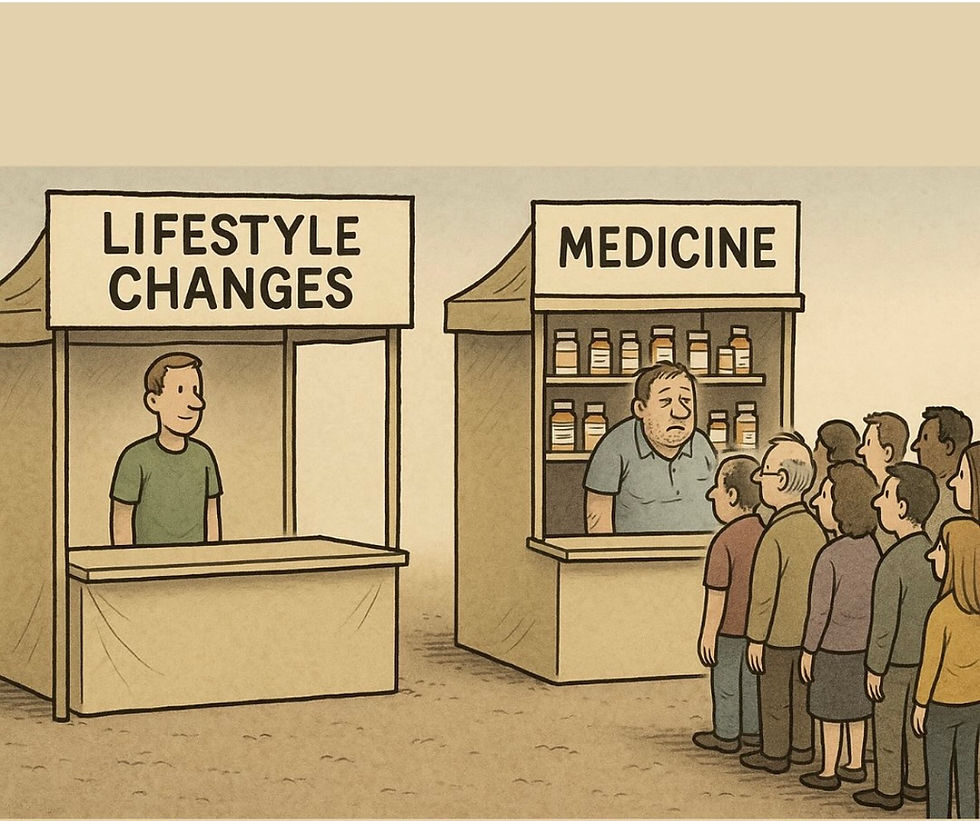
78% of people with severe cases of Covid were obese. So obviously the logical thing to do is reward people who get a shot in their arm with a donut... If you’re still scratching your head with the absurdity of this, let me go on... This virus was a wake up call to the world that if you don’t take care of your metabolic health you are more susceptible to viruses and other pathogens. There’s no hiding that the Western diet is terrible. Seed oils, processed food, sugar. The human body is not meant to ingest this garbage. Yet here is Krispy Kreme turning a blind eye to this and offering up donuts as a reward for getting a vaccine that will MAYBE protect you from Covid. Here’s a hard truth: Donut —> not a healthy food —> metabolic dysfunction —> diabetes, obesity, etc. This is exactly what is wrong with our society.
Take care of your health and stop supporting these big processed food companies that are making this country fat and metabolically unhealthy.
Comments